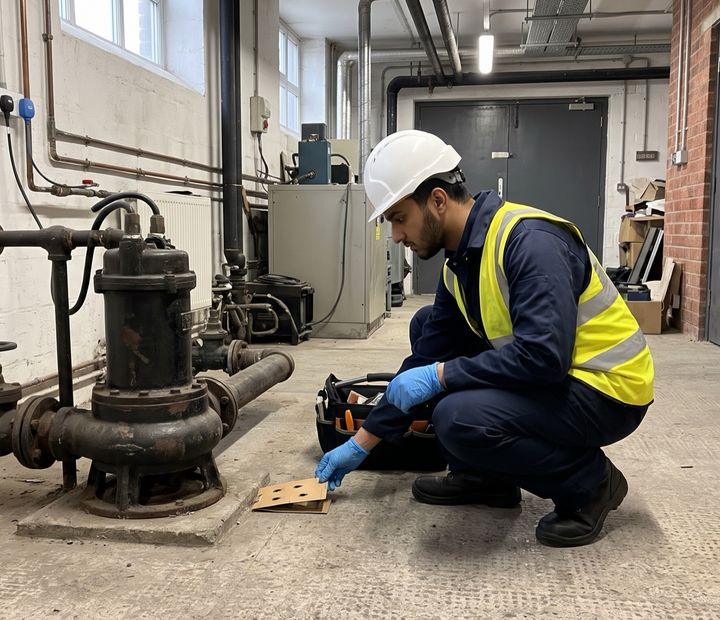
Northwest Environmental clears German and oriental cockroaches from Warrington homes, flats, food businesses and warehouses, from the town centre to Omega and Birchwood. After confirming the species, we place gel baits where they shelter, then return until monitors show no activity, fitting visits around shifts and service. Call our Warrington team or send an enquiry to book.
Why do cockroaches turn up in Warrington?
Two species account for nearly every cockroach job in a British building, and Warrington sees both. The small, light brown German cockroach cannot live outdoors in this climate, so it nearly always arrives with something: a pallet of stock, a box of supplies, a second-hand fridge or catering unit, or a bag from a home where cockroaches are already established. The larger, glossy, dark oriental cockroach belongs to cool, damp places and tends to come up from drains, cellars and the voids under ground floors.
A great deal of stock passes through the town. The M6, M56 and M62 together half-enclose Warrington, and Omega, next to the M62, grew into a largely warehousing district rather than the business park its planners had in mind. Goods arrive, sit in storage and move on, and the warm staff areas inside those buildings are where a German cockroach that rode in on a delivery finds food, water and shelter.
What do we find in Warrington homes and flats?
Semi-detached houses are the largest group of homes in Warrington, at about 40%, followed by detached houses and terraces. In a house, German cockroaches can usually be traced to a recent arrival, such as a used appliance, a delivery unpacked in the kitchen or a bag brought in from elsewhere, and they settle behind the fridge-freezer, under the sink and behind the kick boards of units. Oriental cockroaches appear at floor level, more often in older terraced property or wherever a ground floor or cellar stays damp. Some riverside districts, Latchford, Howley and Westy among them, were flooded by the Mersey in 1990, and in any older home with damp below the floor we check drains, air bricks and voids as well as the kitchen.
Purpose-built flats house around 10% of households. In blocks, heating pipes, service risers and bin stores connect one kitchen to the next, so we look beyond the flat that reported the problem. About 15% of households are tenants of the council or a housing association, and they should report cockroaches to their landlord, who will normally need to arrange treatment across the building.
What about kitchens, shops and warehouses?
On commercial sites cockroaches follow food, warmth and cardboard. Distribution units on Omega and along the motorway network keep canteens, kitchenettes and vending machines close to goods-in, so that is where we start. Birchwood Park employs about 4,200 people, and office kitchens and staff restaurants on a site that size can harbour German cockroaches that came in with supplies. In the town centre, businesses in older buildings, such as the late Victorian shops on Bridge Street, often share walls and voids with the units beside them, and treating one unit while its neighbour stays active only buys time.
How does cockroach treatment run here?
The method matches the rest of the region. We inspect with a torch, confirm the species and set monitors to map the harbourages. Gel bait is placed in the cracks, hinge gaps and appliance housings where they shelter, and where the label and the site permit, a growth regulator or residual product goes into voids and drains as well. Return visits, usually spread over four to eight weeks, deal with nymphs emerging from egg cases after the first visit, and if cockroaches stop taking one bait, we switch to another formulation. You receive a written note after every visit.
Working out of Warrington lets us place those visits where they cause least disruption: before a kitchen opens, after a shop closes, or at a warehouse shift change. A multi-visit programme depends on keeping to the schedule, and short travel within the town makes that easier.
Can the council treat cockroaches instead?
Many councils run a pest control service for residents, but what is covered, who can book and the charges all vary and can change, so check the council’s own pest control pages before you book. If you rent, report the problem to your landlord first. If you would rather book a private firm, call or message us to arrange a visit.
How do you keep cockroaches out once they have gone?
Check deliveries and second-hand appliances at the door, and flatten and remove cardboard daily rather than letting it pile up in stores and kitchens. Repair dripping taps, leaking dishwasher seals and condensation trays, since cockroaches need water more than food. Fill gaps where pipes and cables pass through walls and under units. At home, use the weekly food caddy so scraps leave the house every week. On commercial sites, leave monitors in high-risk spots after treatment, so a new arrival shows up on the next routine check rather than at an inspection.
Cockroach Treatment in Warrington: what we see locally
- Omega, alongside the M62, ended up mostly as warehousing instead of the business park once planned, and in distribution units German cockroaches usually arrive in outer packaging or on returned cages, so our inspections start at goods-in, staff kitchens and vending areas.
- Terraced houses make up just under a quarter of Warrington homes, and their ground-floor voids and older drain runs are where we look first for the larger, darker oriental cockroach.
- Riverside streets in Latchford, Howley and Westy went under water when the Mersey breached its banks in February 1990, and in any older property with a history of damp below floor level we check drains, air bricks and voids as well as the kitchen.
- Food waste has gone out weekly in its own caddy since 31 March 2026, while black bins stay fortnightly, so kitchen scraps no longer need to sit in a bin by the back door for two weeks.
How we deal with it
- 1
Inspection and species check
We confirm whether it is German or oriental cockroaches, set monitoring traps and trace the harbourages, the routes between them and any spread into neighbouring flats, units or shared voids.
- 2
Preparation advice
You are told what to clear, cover or move before treatment, and what to leave alone so the bait stays attractive and is not washed or sprayed away.
- 3
Targeted treatment
Professional gel baits go into cracks, hinges and appliance voids, with an insect growth regulator and residual products in voids, drains and ducts where the species and site call for them.
- 4
Follow-up visits
We return as egg cases hatch, read the monitors, re-treat the active spots and switch bait formulation if cockroaches stop feeding on it.
- 5
Proofing and written report
You receive a record of what was found, what was used and where, plus the proofing and housekeeping actions that close the gaps and stop cockroaches returning.
Cockroach Treatment in Warrington: frequently asked questions
Can a Warrington food business use a council pest contract instead of a private one?
Many councils run a pest control service for residents, but what is covered, who can book and the charges all vary and can change, so check the council's own pest control pages before you book. If you rent, report the problem to your landlord first. If you would rather book a private firm, call or message us to arrange a visit.
We run a warehouse on Omega. How do cockroaches get in, and will treatment disrupt our shifts?
In distribution sites German cockroaches usually arrive with goods, hidden in corrugated packaging, pallets, returned cages or second-hand equipment. They then settle where staff eat and drink: canteens, kitchenettes, vending machines and the warm motor housings of fridges. We inspect those areas and goods-in first, then set monitors to see how far activity has spread. Gel baiting is quiet and quick, so it can be done at a shift change or overnight without stopping work, and the report is written for your site file.
We live in an older terrace near the Mersey. Are large black cockroaches a sign of damp?
Often they point to somewhere cool and damp nearby. The large, dark oriental cockroach favours cellars, underfloor voids and drains, and does well where a ground floor stays wet. Several riverside districts, including Latchford, Howley and Westy, have a recorded history of flooding from the Mersey, and older homes anywhere in the town can have damp voids or cracked drains. Treatment works best alongside fixing the cause: clearing blocked air bricks, repairing leaks and having the drains surveyed so cockroaches cannot come up through a broken pipe.
Will the weekly food waste caddy attract cockroaches?
It should not, as long as it is used as intended. The cockroaches found in British homes live mainly indoors or in drains, so the risk is a kitchen caddy left open or overflowing, not the outdoor container. Keep the indoor caddy lidded, empty it into the outdoor one every day or two, rinse it now and then, and put the outdoor caddy out each week on black-bin day. Weekly collection also means scraps no longer wait a fortnight, which helps in any kitchen that has had cockroaches.
Can you treat a town-centre shop or café before it opens?
Yes. Around Golden Square, Bridge Street and the rest of the town centre we usually arrange early-morning or after-close visits, so food can be covered or removed, baits placed and surfaces left ready to clean before customers arrive. Older shop buildings, such as the late Victorian terracotta frontages on Bridge Street, often share walls and service voids with the units beside them. Where that is the case, we ask you and the landlord to arrange access next door, since treating one unit alone rarely holds.
How can I tell a German cockroach from an oriental cockroach?
Size and colour are the quickest guide. German cockroaches are small, around 12 to 15 mm, light brown with two dark stripes behind the head, and turn up at worktop height around kitchens and appliances. Oriental cockroaches are larger, around 20 to 25 mm, dark brown to black and glossy, and are found at floor level in cellars, ground-floor voids and near drains. The species matters because they hide in different places and the plan differs. If you can, photograph one or keep it in a sealed jar for the technician.
Why have I got cockroaches when my kitchen is clean?
Cleanliness affects how quickly cockroaches multiply, not whether they arrive. German cockroaches are usually carried in with cardboard packaging, second-hand appliances, luggage or catering equipment, and in flats they travel through shared risers, heating pipes and service ducts from neighbouring homes. Oriental cockroaches come up from damp cellars, drains and the voids under older ground floors. Even a spotless kitchen has warmth, water and crumbs behind the fridge or under the dishwasher. Good housekeeping still helps, because with less competing food the bait becomes more attractive.
How long does it take to get rid of cockroaches?
Several weeks rather than a single visit, because neither bait nor spray reaches the eggs sealed inside an egg case. A typical German cockroach treatment runs over three visits across roughly four to eight weeks, with the follow-ups dealing with the young that hatch after the first treatment. Oriental cockroaches and large commercial sites can take longer. You should notice a clear drop in activity within the first couple of weeks, and we carry on until the monitoring traps stay empty on consecutive checks.
More in Warrington
Last updated: