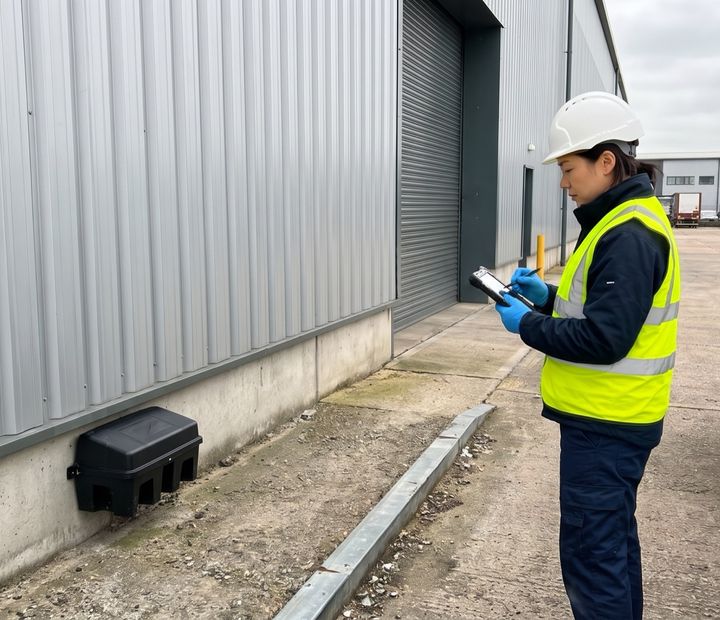
Northwest Environmental looks after businesses across Widnes, from logistics units at 3MG and Stobart Park to Ditton Road yards, schools, shops and food outlets near Widnes Market. Working from Warrington, we survey the site, clear live activity, then inspect on a risk-based schedule with a report after each visit. Call or use the contact form to book a survey.
What does commercial Widnes look like for pest control?
Widnes was built on chemicals. The town’s first chemical factory, making alkali, opened in 1847 between the Sankey Canal and the railway, and by the 1950s the town held 45 major chemical factories. Most have closed and the local economy now runs mainly on services, yet the wider borough remains an industrial, scientific and logistics centre, with 67,000 jobs counted in 2022.
That history has left a varied commercial estate. Freight and distribution are based at the 3MG Mersey Multimodal Gateway in West Bank, opened in 2006, and at Stobart Park, whose first phase in 2010 brought a large refrigerated warehouse for Tesco. Ditton Road still has a chemical plant and a big timber yard, with two medium-sized industrial estates close by in Ditton. In the town centre the long-standing Widnes Market, with its hall and open market, sits beside the Greenoaks Centre, while the Hive Leisure Park forms part of the Widnes Waterfront. Add schools, venues such as Halton Stadium and the Catalyst science centre, and landlords of the town’s tightly packed housing, and one morning’s round can cover very different sites.
Why do pests find their way into Widnes premises?
Water and open land account for much of it. The town lies on the north bank of the Mersey where the estuary narrows at the Runcorn Gap, and its brooks, including Ditton, Steward’s and Bower’s, drain into the river. Brown rats use banks and culverts like these for cover and travel, so a unit with a brook, ditch or the estuary edge nearby starts with more pressure than one ringed by tarmac.
Much of the green space is reclaimed industrial ground. Spike Island, where the Sankey Canal begins, has been cleared of industry, and the meadows of Pickerings Pasture were laid over an old household and industrial landfill. The Sankey Valley Park and the Trans Pennine Trail add longer green corridors. That is good news for wildlife and walkers, but scrub and long grass along a fence line also give rodents a home within easy reach of a bin store.
Then there is traffic. Goods move on the A562 and A557 and across the Mersey Gateway, which opened in 2017 with a new dual carriageway to Speke Road on the Widnes side. Each delivery is a chance for mice or stored-product insects to arrive in pallets and cartons, and large flat-roofed sheds near an estuary are just the sort of place gulls pick for nesting.
What do we typically find, site by site?
In chilled and frozen warehousing, mice are the main concern. They shelter in insulation behind damaged panels and beside warm plant, feed on picking spillage and ride in on pallets left at ambient temperature by the doors, so dock seals and leveller pits are checked at every visit.
Yards and industrial estates along Ditton Road lean towards rats: burrows beneath stacked materials, runs along fences and activity around skips. Timber also draws wasps in summer, because workers chew weathered wood into the paper for their nests.
Markets and shopping centres come down to shared responsibility. Many traders work side by side, waste is often pooled and service voids link units, so mice and cockroaches can pass from one tenancy to the next. Plans work best when the operator and each trader know who checks what. Food and leisure units at the Waterfront carry the familiar kitchen risks of late finishes, warm equipment and waste left out overnight.
Older buildings add another layer. Widnes has 24 listed buildings, mostly brick, local red sandstone and terracotta, and proofing them against birds or rodents means choosing fixings that protect the masonry.
How does a Widnes contract run from Warrington?
Warrington is about 8 miles upstream, so Widnes sits inside our regular rounds rather than at the edge of the map. A contract opens with a walk around the building and its boundary, treating the brook, scrub or neighbouring yard beyond the fence as seriously as the goods-in door. You receive a written plan, any live activity is cleared through closer visits, and routine inspections follow at a frequency set by risk, each ending with a report of findings and who needs to act. If staff see something in between, we return under the agreement.
How can Widnes businesses keep pests out between visits?
Waste comes first. Under the Simpler Recycling rules, businesses in England with ten or more full-time equivalent employees must now have food waste collected separately, and smaller firms follow from March 2027. A separate food bin only helps if it is lidded, emptied often and kept away from doors. Halton begins weekly household food waste collections in November using lockable kerbside caddies, but flats and communal properties stay on their existing bins for now, so managing agents of blocks above or beside shops should watch shared bin stores closely.
Proofing comes next. The council advises householders to seal openings wider than 2.5 cm, but commercial premises need much tighter standards, because a mouse fits through a far smaller gap. Cut vegetation back from walls, keep stacked materials off the ground and clear of fences, and log every sighting with the date and place so each visit starts from evidence.
Commercial Pest Control in Widnes: what we see locally
- Logistics is a large part of commercial Widnes, with the 3MG freight park in West Bank and Stobart Park, home to a big refrigerated warehouse for Tesco, so chilled storage, pallet traffic and dock doors shape much of the risk in the town.
- Ditton Road still carries a chemical plant and a large timber yard, and Ditton has two medium-sized industrial estates, where stacked materials, skips and rough margins can give rats cover right up against buildings.
- The town sits on the north bank of the Mersey at the Runcorn Gap and drains to the estuary through Ditton, Steward's and Bower's Brooks, so brook banks and the river edge give brown rats natural routes towards premises.
- Halton Borough Council's pest control page offers treatments to schools in the borough, booked by email, but describes nothing for businesses, so Widnes shops, warehouses and food premises need a private arrangement.
- Widnes has 24 listed buildings, mostly in brick, local red sandstone and terracotta, so any bird or rodent proofing on them is planned around fixings that will not damage the historic masonry.
How we deal with it
- 1
Site survey
We walk the site inside and out: goods-in, waste areas, drains, doors and seals, roof line and voids, plus whatever sits beyond the fence, and we talk to the staff who see the site at night.
- 2
Written plan and agreement
You receive a site plan with numbered monitoring points, the pests covered, the visit frequency and why, what is included and what is quoted separately, and the term and notice period.
- 3
Clearing live activity
If pests are already active, we treat first with a short run of closer-spaced visits until activity stops, then move the site onto its routine schedule.
- 4
Routine inspections
Every monitoring point is checked and recorded. Where activity is low we rely on non-toxic monitoring and traps rather than keeping poison down for its own sake.
- 5
Reports and actions
Each visit ends with a report of findings, the actions we took and the actions for you, your landlord or facilities team, with proofing defects photographed.
- 6
Callouts and annual review
If staff see pests between visits, we arrange a callout under your agreement. Once a year we review trends with you and adjust the plan if the risk has changed.
Commercial Pest Control in Widnes: frequently asked questions
Does Halton Borough Council deal with pests at business premises in Widnes?
Not according to its own pest control page. That page sets out chargeable treatments for residents and a service that schools across Halton can book by email, with academies possibly asked for a purchase order, but it describes nothing for shops, warehouses, offices or food businesses. A Widnes business therefore needs a private contractor. We survey the premises, put a written plan in front of you and keep the records an inspector will want to see.
We run a school in Widnes. Should we use the council's service or a contract?
Either can work, depending on what you need. Halton Borough Council can treat schools in the borough, including for cockroaches, and takes bookings by email. A contract suits a school that wants routine inspections of kitchens, stores and outbuildings, a written plan and a dated report after each visit for governors or the catering provider. We schedule visits in the holidays or after the school day and choose methods suited to a site full of children, such as secured stations outside and trapping or non-toxic monitoring indoors.
Mice keep turning up in our chilled warehouse. How do they survive the cold?
House mice cope with chilled stores far better than most people expect. They nest in insulation behind damaged panel cladding, shelter around compressors and motor housings that give off warmth, and live in pallets and packaging held at ambient temperature near the doors, feeding on spillage from picking. In Widnes logistics units we pay close attention to dock seals, leveller pits, panel joints and the marshalling area, and place monitoring so activity shows up before it reaches stock.
Our yard on Ditton Road holds stacked timber. Why do rats keep coming back?
Stacked timber, pallets and sheeting give rats dry, undisturbed cover with gaps to run through, and skips, rough margins and staff food waste supply the rest. Clearing the rats without changing the yard only buys time. We look at how long stacks stay untouched, whether they sit on bare ground, where bins and skips are kept and how the boundary is maintained, then set external stations along the runs we find. In summer we check the stacks for wasps too, as they scrape weathered wood to build nests.
Our building in Widnes is listed. Can bird proofing be fitted without harming it?
Usually, with careful planning. Terracotta and soft sandstone can crack or spall if drilled carelessly, so we favour fixings into mortar joints, clamp or adhesive systems where they suit, and netting or wire that can later be removed without leaving marks. Works that affect the character of a listed building can need listed building consent, so we give you a written specification to discuss with the council's planning team first. Active nests are protected by law, which means timing matters as well.
How many visits a year does a commercial pest control contract need?
It depends on the risk at your site rather than a fixed package. Food manufacturers, busy kitchens and warehouses holding food or animal feed usually need more routine inspections than offices or dry storage, and many food sites have eight or more a year. Premises beside water, open land or waste operations, or with a recent infestation, may need more. Some audit standards and retailer codes set their own minimum. We set out the frequency and our reasons in the written plan and review it with you each year.
What is included in a contract, and what is quoted separately?
Before you sign, we put in writing which pests are covered, how many routine visits you get, what happens if you report activity between visits and what reporting you receive. Work that usually sits outside routine visits, such as proofing repairs, bird netting, clearing heavy fouling or treating a pest not named in the agreement, is quoted separately so nothing comes as a surprise. The term and notice period are written in as well. If anything is unclear, ask us before you commit.
What will an environmental health officer ask to see?
Expect to be asked how you control pests and to show the evidence. That usually means a site plan of monitoring points, a report from each visit, a record of any activity and what was done about it, proofing recommendations and whether they were completed, data sheets for products used and your contractor's details. Officers also look at the premises themselves: gaps, droppings, open food and waste. Good records do not excuse an infestation, but they show it is being managed, which counts towards confidence in management under the hygiene rating.
More in Widnes
Last updated: