Northwest Environmental treats pests at Macclesfield homes and business premises, including Tytherington, Higher Hurdsfield and the streets around Waters Green. We deal with wasp nests, rats and mice, grey squirrels in lofts and pigeons on mill buildings, and run contracts for businesses. Bookings go through our phone line or website, and each Macclesfield visit is planned from Warrington.
What did the silk trade leave behind for pests?
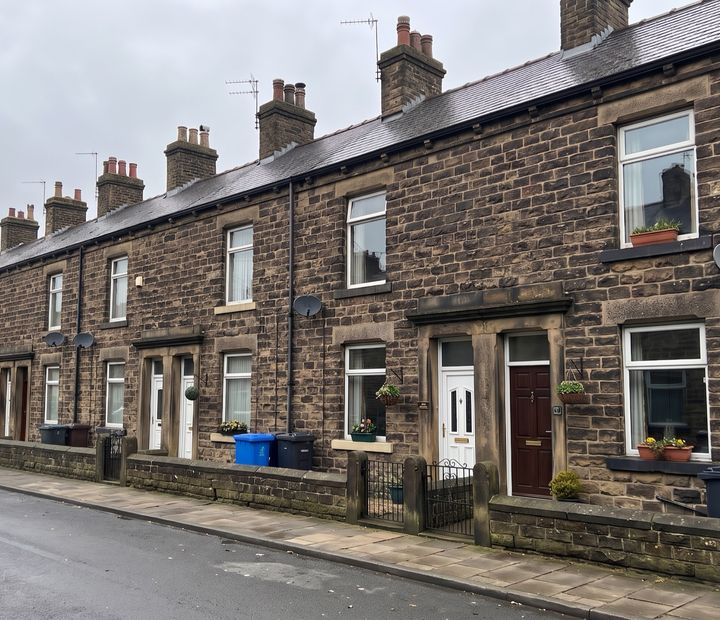
The shape of Macclesfield’s housing still follows its silk boom. Charles Roe opened the town’s first silk mill in the mid-1740s, and within about ninety years more than seventy mills were employing around 10,000 people. The homes built for that workforce still set the terms for pest work in the old centre: brick terraces of the 1830s with a weavers’ garret along the top floor, like the listed row on Paradise Street or the Grade II* former weavers’ houses on Chapel Street. A garret was a workshop, so it usually means a wide roof, long runs of window and a lot of old timber, and all three give wasp queens, roosting birds and the odd squirrel somewhere to settle.
Older again are the timber-framed houses, or houses hiding a timber-framed core behind later brick, and a good deal of Georgian building around the centre. With well over two hundred listed buildings in town, proofing here is often work on protected fabric. Mesh, gap-filling and the fixings used for bird proofing all need choosing with that in mind, and where a change could alter a listed building’s character, consent from Cheshire East Council, as the planning authority, may be required before anything is fitted.
What happens when a mill becomes flats or offices?
Plenty of the mills survived by changing use. Hovis Mill, built on the canal’s west bank in the 1820s, is now apartments; the top floors of Short Street Mill became cottages; St George’s Street Mill holds offices; and large Grade II* buildings such as Victoria Mills and Albion Mill still dominate their streets. A converted mill combines the pest problems of a big commercial building with those of a household. Feral pigeons use the deep window reveals and ledges of tall brick elevations, mice can travel through service risers and boxed-in pipework between flats, and a single bin store may serve dozens of homes.
On buildings like these we usually work with a managing agent or facilities contact as well as the residents, so a treatment in one flat is matched by checks in the shared areas. Bird proofing on a mill is planned around access at height, the listed elevations and the people living or working inside.
Why do the canal, the river and the hills matter?
Two waterways cross the town. The Macclesfield Canal, planned by Telford and cut between 1826 and 1831, is part of the Cheshire Ring, has been a conservation area since 1975 and is maintained by the Canal & River Trust. The River Bollin rises in Macclesfield Forest, runs through the town and carries on past Wilmslow towards the Mersey, with the Bollin Valley Way setting off from Macclesfield Riverside Park. Brown rats swim well and favour soft banks, overgrown edges and any food left behind by passers-by, so gardens and yards backing onto either corridor tend to see more rodent activity than streets set further back.
The Middlewood Way adds a third green line, following the old railway out towards Bollington through woodland, meadow and farmland. To the south-east, Macclesfield Forest’s conifer plantations surround the Ridgegate and Trentabank reservoirs on the edge of the Peak District. Grey squirrels, hornets and tree-nesting wasps all do well where woodland meets gardens, and homes on the eastern side, out towards Higher Hurdsfield, sit closest to the open country.
Which pests follow Tytherington’s newer houses?
North of the centre, Tytherington grew up after Tytherington Hall was pulled down in the 1960s, and Manchester Road splits it into the Dorchester Way side and the Rugby Drive side. The pattern here is that of a suburban estate rather than a mill town. Wasp queens use gaps behind soffits and fascias, mice slip in around service pipes and follow cavity walls, and squirrels cross from mature garden trees onto roofs. Tytherington Business Park, north-east of the estate, brings offices and landscaped grounds into the same patch, and the same pressures tend to run across both sides of that boundary.
Who in Macclesfield needs more than a one-off visit?
The town’s economy goes well beyond its shops. AstraZeneca manufactures here, its roots in ICI’s pharmaceutical division, and Novartis, which began as Geigy, opened a site after the Second World War, alongside firms in textiles, light engineering, paper and plastics. Macclesfield District General Hospital stands at West Park on the site of the 1844 workhouse, and the station saw nearly 1.5 million passengers in 2024/25. Town-centre retailers and the traders who arrive for the Treacle Market on the last Sunday of each month add a different kind of risk, centred on food, packaging and waste.
Cheshire East does not offer businesses one-off treatments. Its contracts cover rats, mice, ants, fleas, cluster flies and stored product pests, with an inspection, visit reports and a record of where bait stations sit. Our commercial pest control contracts keep the same kind of paperwork and can also take in wasps, birds, cockroaches and other pests outside that list, with visits timed around opening hours.
Where does Cheshire East Council’s service stop?
For householders, the council treats rats and mice only, as a paid service that includes up to three visits, carried out on weekdays without fixed appointment times. Wasp nests, fleas, bed bugs, ants and pigeons all fall outside it, and residents are pointed to a specialist firm or left to treat the problem themselves. That makes the council a sensible first call for mice if a daytime weekday visit suits you, and a private firm the usual route for almost everything else. When you book with us, we agree a time for the visit, which matters to anyone working shifts, running a shop or arranging access to a let property.
Will three-weekly bins change things from 2027?
Cheshire East plans to move black general-waste bins to a three-weekly collection from early 2027 and to start collecting food waste every week, while homes on black sacks stay fortnightly. Taking food out of the black bin should help, provided caddies are used and kept closed. Where food still ends up in general waste, three weeks is a long time for a bin in warm weather: flies have time to breed, and rats and, in late summer, foraging wasps are drawn in. Rinsing containers, keeping lids shut and standing bins on hard ground rather than soil all reduce the pull. The council’s own advice to remove food sources, including spilled bird feed in gardens, is worth following too, and it is often the simplest first step before rat and mouse control or wasp nest treatment is needed.
What Cheshire East Council offers
Cheshire East Council's home service covers rats and mice only, as a paid one-off treatment that includes up to three visits, with officers calling on weekdays during working hours and no fixed appointment slots. Anyone with wasps, other insects, birds or a different pest is told to find a specialist contractor or deal with it personally. Businesses cannot book a single visit and are offered contracts instead, quoted after a site inspection.
Council pest control page (checked 2026-10-24).
Our services in Macclesfield
Wasp & Hornet Nest Removal in Macclesfield
Weavers' garrets, timber-framed cores and the high eaves of converted mills give queens dry roof voids in the old centre, while Tytherington homes tend to find nests behind soffits and fascias. The council does not treat wasps at homes, so householders need a private firm or must tackle a nest themselves.
Rat & Mouse Control in Macclesfield
The Macclesfield Canal and the River Bollin both cut through the town, giving brown rats banks and cover right beside gardens and yards. In converted mill flats, mice can move from one home to the next along shared risers and boxed-in pipework.
Bird Control & Proofing in Macclesfield
Multi-storey brick mills, many of them listed, offer pigeons ledges and window reveals at height, so proofing has to suit protected brickwork and may need listed building consent first.
Squirrel Removal in Macclesfield
Woodland along the Middlewood Way and the conifer plantations of Macclesfield Forest keep grey squirrels within easy reach of suburban gardens and older roofs on the edges of town.
Commercial Pest Control in Macclesfield
Cheshire East offers businesses contracts for a short list of pests and no one-off visits, so shops, offices on Tytherington Business Park, food businesses and market traders often need wider cover.
Other services available in Macclesfield:
Local factors behind pest problems in Macclesfield
- A large share of Macclesfield's listed homes have a weavers' garret as their top storey, a building type the silk trade produced; the national heritage list counted 218 listed buildings in the town in 2014, 18 of them at Grade II*. [Wikipedia]
- Surviving silk-weavers' housing from the 1830s includes a listed row of 17 garret houses on Paradise Street, a one-time back-to-back terrace on Pool Street and five Grade II* weavers' houses on Chapel Street. [Wikipedia]
- Hovis Mill, put up in the 1820s on the west bank of the Macclesfield Canal, has been turned into apartments, and the upper floors of Short Street Mill were converted into cottages. [Wikipedia]
- Tytherington, on the northern side of the town, is a suburban estate laid out after Tytherington Hall was knocked down in the 1960s, and Tytherington Business Park sits to its north-east. [Wikipedia]
- The Macclesfield Canal, planned by Thomas Telford and built between 1826 and 1831, crosses the town on its way from Marple to Kidsgrove; it belongs to the Cheshire Ring, is cared for by the Canal & River Trust and has been a conservation area since 1975. [Wikipedia]
- The River Bollin, a major tributary of the Mersey, rises in Macclesfield Forest and passes through the town, and the 25-mile Bollin Valley Way follows it from Macclesfield Riverside Park to the Manchester Ship Canal at Partington. [Wikipedia]
- Macclesfield Forest, roughly three miles south-east of the town, is mostly a United Utilities conifer plantation surrounding the Ridgegate and Trentabank reservoirs. [Wikipedia]
- The Middlewood Way is a ten-mile route that leaves from Macclesfield station along the old Macclesfield, Bollington and Marple railway, closed in 1970, through woodland, meadow and farmland. [Wikipedia]
- Black general-waste bins across Cheshire East are due to move to a three-weekly round in early 2027, when a weekly food-waste collection also starts; households on black sacks will keep a fortnightly service. [Cheshire East Council]
- Cheshire East Council gives businesses pest control contracts only, not one-off treatments, and those contracts cover rats, mice, ants, fleas, cluster flies and stored product pests. [Cheshire East Council]
Pest control in Macclesfield: frequently asked questions
Can Macclesfield residents get pest control from Cheshire East Council?
For homes, rats and mice only. The council charges for a one-off treatment that includes up to three visits, takes bookings online, by phone or by email, and sends officers on weekdays during the day without set appointment times. Wasps, ants, fleas, bed bugs, birds and everything else sit outside the service, and the council's advice is to hire a specialist or tackle the pest on your own. Firms are not offered single visits, only an annual contract. The council's pest control pages carry the current details and charges.
Do you cover Tytherington, Higher Hurdsfield and the villages around Macclesfield?
Yes. We work across both Macclesfield postcode districts: SK10, which takes in the north of the town along with Bollington and Prestbury, and SK11, which covers the south of the town and Sutton. That includes Tytherington and its business park, the terraced streets of the old centre and Higher Hurdsfield on the eastern edge. Further afield we also look after Wilmslow and the rest of Cheshire, and we schedule those visits from Warrington.
Will Cheshire East treat rats coming up from the Bollin or the canal?
At a home, yes: rats are one of the two pests the council deals with for householders. If a weekday daytime visit without a fixed slot suits you, it is a reasonable option. Come to us if you need an agreed time, if the rats are at a business, shop or yard, or if you want a survey of how they are getting in alongside the treatment. Rats living along a watercourse will keep testing the same gaps, so finding the entry points matters as much as the bait.
Do we need listed building consent for bird proofing on a mill or weavers' house?
Sometimes. Treating a pest inside a listed building does not alter it, but fixing netting, spikes or wire to the outside, or replacing vents and grilles, can affect its character, and consent may then be needed from Cheshire East Council as the planning authority. We set out the method, the fixings and where they go before work starts, choosing options that sit in mortar joints or behind existing openings, so the owner or managing agent can check with the conservation team first.
Will the switch to three-weekly black bins bring more pests?
It could where food still goes in the black bin. Cheshire East intends to collect general waste every three weeks from early 2027, with food waste going weekly and homes on black sacks staying fortnightly. If food goes in the caddy, the black bin should hold little that interests rats or flies. Trouble tends to come from split sacks, overfilled bins and lids left open in warm weather. Shared bin stores at flats and converted mills need the most attention, because one careless household affects everyone.
Our business is in Macclesfield. Why not just use the council's contract?
You can, if it covers what you need. Cheshire East offers businesses contracts only, for rats, mice, ants, fleas, cluster flies and stored product pests, with an inspection, a quote, visit reports and a record of bait points. We provide the same kind of documented contract and can add wasps, birds, cockroaches, bed bugs and other pests it does not list, or deal with a one-off problem without a year's commitment. Shops, offices, food businesses and market traders often need that flexibility.
Do squirrels get into lofts on the edges of Macclesfield?
They can wherever mature trees reach a roof, and homes near woodland, such as the stretches beside the Middlewood Way, are more exposed than those in the terraced centre. Grey squirrels get in through gaps at the eaves, verges and fascias, then chew timber, insulation and sometimes cables. A trapped grey squirrel cannot legally be released, so dealing with one means removal followed by proofing the entry points, after checking that no animals or young are shut inside.
Nearby areas we also cover
Sources (9)
Last updated: