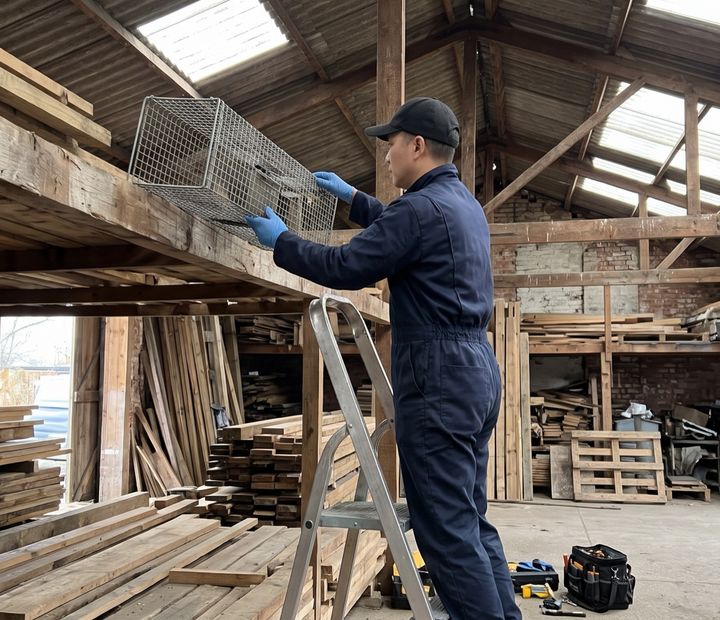
Northwest Environmental removes grey squirrels from lofts, roof voids and outbuildings in Wilmslow, Knutsford and Alderley Edge, including Styal and Dean Row. We survey the roof, set traps that are checked every day, humanely dispatch greys as the law requires and proof the gaps. The council does not treat squirrels, so ring us or use the website form.
Why do grey squirrels end up in lofts here?
Grey squirrels thrive where green space, garden trees and houses run into one another, and that describes a good deal of this corner of Cheshire East. The Bollin runs through The Carrs Park in Wilmslow, Lindow Common sits beside Lindow Moss, where bog restoration began in 2022, the National Trust’s Edge rises above Alderley Edge, and Tatton Park’s 2,000-acre estate and deer park stretch north of Knutsford. For a squirrel, a garden that backs onto any of these is a short journey from open ground to a fence, a branch and a roofline.
The calendar does the rest. From autumn, greys look for somewhere drier and warmer than a drey to spend the winter, and from late winter, females want a safe place for a first litter, often followed by a second in summer. Scratching and thumping overhead around dawn, picking up again in the late afternoon, is the usual sign that one has found its way in.
Which roofs give them the easiest way in?
The railway-era villas are the classic case. Built for Manchester merchants after 1842, and in Alderley Edge for cotton barons by 1850, many have large roof spaces, several gables and long runs of timber fascia and bargeboard. Softwood that has weathered is easy to gnaw, and because these lofts are often used only for storage, a nest of shredded insulation and leaves can grow for months before anyone goes up the ladder.
Timber-framed farmhouses roofed in Kerridge stone slate, many of them listed, offer gaps at the verges and where frame meets masonry. These are slow jobs to proof, because the heavy slates should not be disturbed and repairs need to match the original fabric.
On the 1960s and 1970s estates at Colshaw Farm, Spath Lane and Longridge, look at what stands beside the house: a fence, a shed or a garage roof is often the squirrel’s way up. Newer roofs, such as those at Alderley Park, are usually tighter, but chewed plastic vents and gaps at dry-fixed ridges and verges still turn up. In offices such as those on Altrincham Road or at the Radbroke Hall campus, the first report is often noise or debris above a suspended ceiling.
How does a squirrel job run here?
It begins with a survey. We trace every hole and climbing route from outside, then inspect the loft for the nest, how many squirrels are using it, damage to cables and insulation, and any sign of bats or nesting birds, which can change what is sealed and when.
Traps go on the runs in the roof space and are checked at least once a day, weekends included. Because our technicians work out of Warrington on planned rounds, we agree the visit pattern before anything is set, along with loft hatch access and a key holder if you commute or travel. Any grey caught is humanely dispatched, as releasing one elsewhere is an offence; we explain that at the outset.
Once checks show no fresh activity, every entry point is proofed with galvanised mesh, metal sheet or new timber, matched to the original on older and listed houses. Soiled insulation is bagged and removed, and any chewed cables are pointed out for an electrician. Most homes take one to two weeks from survey to final check.
Cheshire East’s household pest service treats rats and mice only, and its business contracts do not include squirrels, so homes, landlords and employers here arrange this work privately.
How do you keep them out afterwards?
Proofing does most of the work, but the surrounding parks and gardens will keep producing young squirrels looking for a home. Each autumn, walk round the eaves and look for fresh gnawing, and have softened fascias repaired before they give way. Cut back branches close to the roof, after checking with the council whether the tree is protected. If you feed garden birds, use a squirrel-resistant feeder. Businesses should keep the survey, the trap log and the proofing record together in the property file, so a repeat problem can be traced to the same weak spot.
Squirrel Removal in Wilmslow, Knutsford & Alderley Edge: what we see locally
- Many of the houses built for Manchester merchants and cotton barons after the railway arrived in 1842 have large roof spaces behind timber eaves, and a loft nobody visits lets a nest grow for months before the noise is noticed.
- Timber-framed farmhouses with Kerridge stone-slate roofs, including listed examples in Styal, need proofing that suits heavy slates and old timber, and some repairs may need listed building consent.
- Homes close to The Carrs Park, Lindow Common and the edges of Tatton Park's 2,000-acre estate sit beside open green space that grey squirrels can use as a route towards garden trees and rooftops.
- Cheshire East Council's household service treats only rats and mice, and squirrels are not on its list of pests for business contracts either, so squirrel work here is arranged privately.
- Large workplaces such as the office and laboratory buildings at Alderley Park, which housed more than 150 companies by 2017, often report squirrels first as noise above a suspended ceiling, so visits are planned around working hours.
How we deal with it
- 1
Roof and loft survey
We trace every hole and climbing route from outside, then check the loft for the nest, how many squirrels are using it, damage to timber and cables, and any sign of bats or nesting birds.
- 2
A plan explained plainly
We set out where traps will go, how the daily checks will be covered, what the law requires for any grey squirrel caught, and anything you need to do first, such as clearing access to the loft hatch.
- 3
Trapping, checked every day
Cage traps, or spring traps approved for grey squirrels and set as their approval requires, go on the runs in the roof space and are checked at least once a day. Greys are humanely dispatched; a red squirrel would be released unharmed.
- 4
Proofing the way in
Once the loft is clear, entry points are closed with galvanised mesh, metal sheet or new timber, and chewed fascias, soffits and vents are repaired so another squirrel cannot reopen them.
- 5
Clean-up and checks
Nest material and soiled insulation are bagged and removed, and any gnawed cables are pointed out so an electrician can test them before the loft is used again.
- 6
Follow-up and report
We return to confirm there is no fresh activity and the proofing is holding, then send a written summary of what was found, caught and repaired.
Squirrel Removal in Wilmslow, Knutsford & Alderley Edge: frequently asked questions
Squirrels are under the stone-slate roof of our listed farmhouse near Styal. Will proofing need consent?
It may. Like-for-like repairs, such as replacing a chewed bargeboard in matching timber, are usually straightforward, but changes that alter a listed building's character can need listed building consent from Cheshire East. We plan the proofing so that mesh sits out of sight behind existing features and the heavy Kerridge slates are left undisturbed. We check for bats first, because older roofs can hold roosts and bats are protected. If in doubt, speak to the council's conservation team before the proofing visit.
We live near Lindow Common. Will more squirrels just move in after you remove these?
Others will look, which is why the proofing matters more than the trapping. Clearing the squirrels in your loft does not empty the green space nearby, and a young grey searching for a territory in autumn will test the same weak spots. Once every entry point is closed with galvanised mesh, metal sheet or sound timber, the roof becomes a poor prospect. Walk round the eaves each autumn, look for fresh gnawing and get softened boards repaired before they give way.
Is autumn a good time to deal with squirrels in the loft?
It is one of the better times. Grey squirrels look for warm winter quarters from autumn, so October and November are when many move in, and dealing with them then means trapping is finished before females give birth in late winter. A loft with young in it takes longer, because we will not seal dependent young inside. If you hear scampering overhead around dawn this autumn, book a survey sooner rather than later.
We are on the Colshaw Farm estate and next door has heard squirrels too. Should we sort it together?
Yes, if you can. Where houses are joined, roof spaces may be linked or divided only by a party wall that squirrels can get round or over, and the hole they use may be on either side. Sealing one house can simply push them next door. We survey both roofs from outside, agree trap positions and daily checks with each household, and proof the whole roofline in one go, which tends to work out better for everyone.
Can a squirrel be caught and released somewhere else?
Not if it is a grey squirrel. Greys are a listed invasive non-native species, and under the Invasive Alien Species (Enforcement and Permitting) Order 2019, as well as the Wildlife and Countryside Act 1981, it is an offence to release one or let it escape into the wild without a licence. That includes driving it to a wood a few miles away. A grey caught in a trap has to be humanely dispatched. Red squirrels are the opposite: they are protected, and one caught by mistake must be let go unharmed. Across most of our area a red in a loft is very unlikely; the Sefton coast and the countryside around it are the exception.
How can I tell whether it is squirrels or rats in my loft?
Timing is the best clue. Grey squirrels are active by day, so noise that starts around dawn and picks up again in the late afternoon points to squirrels, while scratching that begins after dark is more likely to be rats or mice. Squirrels usually get in high up, through a gnawed hole in the fascia or soffit near a tree or climbing plant, whereas rats tend to come up through wall cavities, drains or gaps low down. A bulky nest of leaves and shredded insulation is typical of squirrels. If you are unsure, a survey settles it before any traps go down.
Can I just block up the hole the squirrels are using?
Not while they are still inside. A squirrel shut into a loft will chew a new way out, sometimes through a ceiling into the house, and an animal left to starve suffers needlessly, which can be an offence under animal welfare law. From late winter to late summer there may also be young in the nest that cannot leave yet. Holes should be sealed only once the loft is clear, confirmed by checking for fresh activity, or in suitable cases after a one-way door has let the squirrels out. That is why proofing comes at the end of the job, not the start.
More in Wilmslow, Knutsford & Alderley Edge
Last updated: